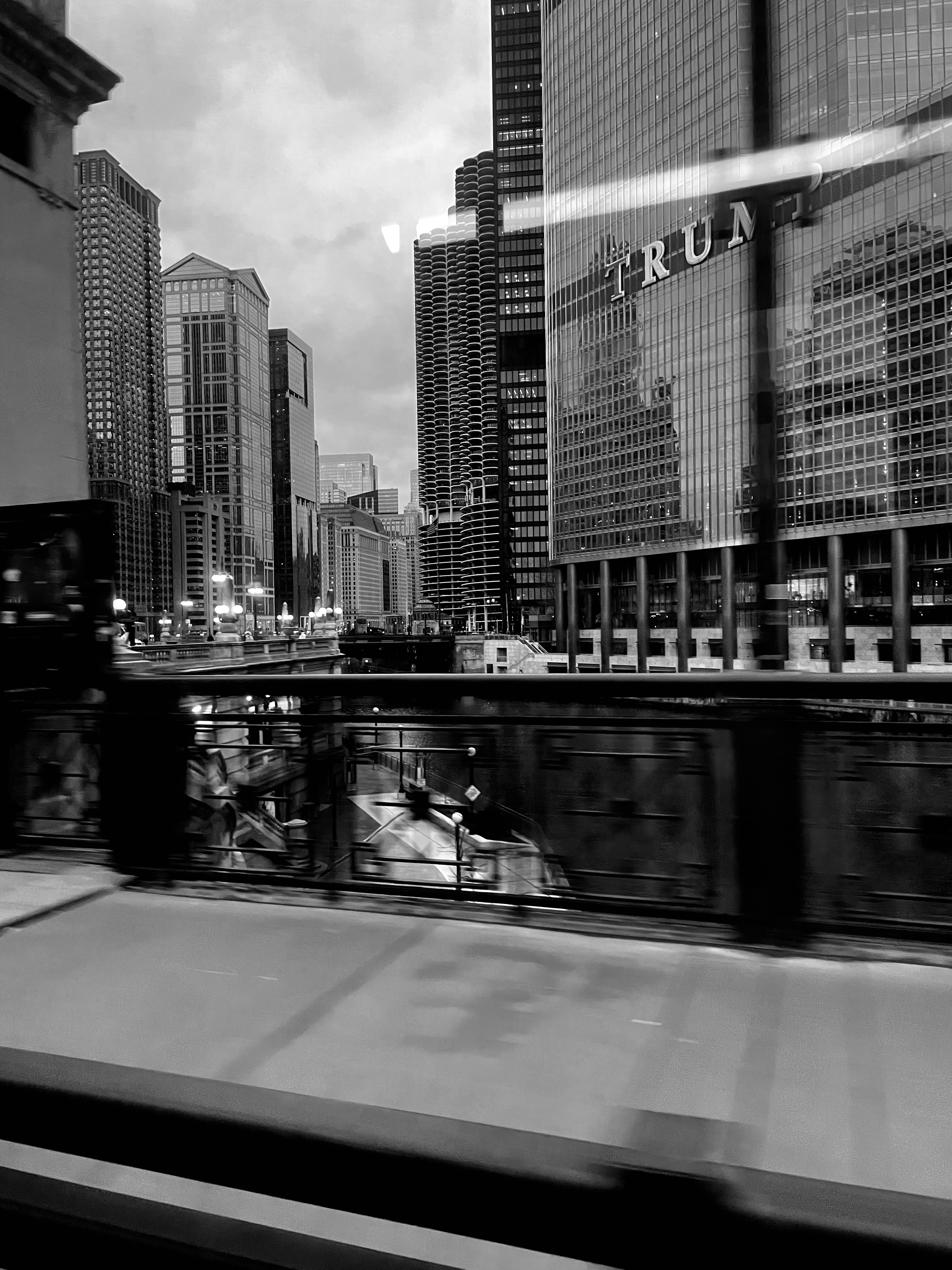
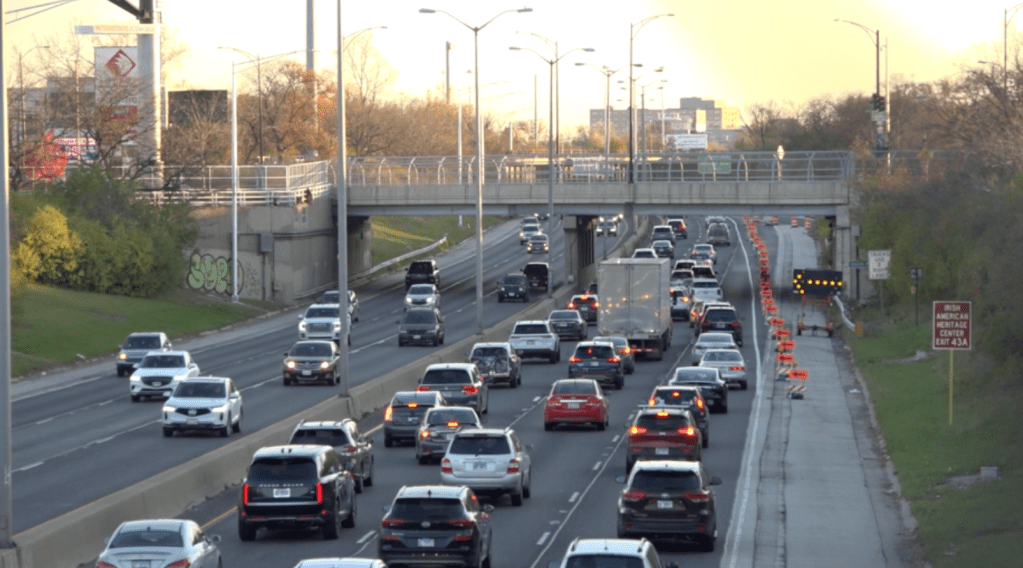
The average Chicago driver spent about 155 hours in traffic in 2022.
The beautiful Windy City, known for its breathtaking architecture and vibrant music scene has now made headlines with its traffic levels. In 2022, Chicago was ranked the number one most congested city in the United States and the second most congested in the world. According to the Chicago Data Portal, the city has seen a 7% increase in traffic compared to 2019.
One of the biggest key contributors to this problem is the ongoing construction happening around the city. DePaul’s School of Public Service Professor, Joseph Schwieterman, thinks the city did not spread these projects out well enough.
“We’ve had like a trifecta on highway construction, it’s just been really unfortunate. We have, first, Lakeshore Drive’s been under construction and Kennedy Expressway, so both major highways coming into downtown,” Schwieterman said. “The city’s kind of dropped the ball, that these projects should not happen at the same time.”
The Chicago Department of Transportation said they are working alongside the Illinois Department of Transportation to coordinate construction projects affecting the public, to minimize the impact of traffic delays. However, with construction happening just about everywhere, side streets are impacted and are congesting neighborhoods with traffic. Chicago residents are overwhelmed with the lack of communication from the city.
“I would love it if say, the city and CTA in general were more communicative with alder people,” Michaela Bateman, a Chicago commuter, said. “Whatever committees are in charge of delivering neighborhood news in apps to people so that we just know when a lot of these city-wide construction projects are happening, so that we can kind of accommodate for them.”

With the increase in congestion on main roadways, our city is also facing environmental impacts from the abundance of greenhouse gas emissions. In the National Lung Association’s State of the Air 2023 report, Chicago was ranked the 23rd most polluted city in the United States. In that report, the city was found to have high exposure year-round to fine particle pollution, usually seen when fossil fuels are burned. The main areas in Chicago that are exposed to the highest concentrations of it are located near highways and neighborhoods on the south and west sides.
According to the Natural Resources Defense Council (NRDC), pollution from diesel engines alone are projected to cause about 400 early deaths, nearly 200 heart attacks and thousands of respiratory illnesses this year in Illinois. The Chicago Department of Public Health Deputy Commissioner, Megan Cunningham, said that evidence has shown that there’s a strong relationship between pollution exposure and health problems in the city from dust, lead and diesel emissions.
“If we’re going to have traffic, we’d much rather have it electrified, then we don’t have emissions, or at least no emissions from the cars moving around directly,” said Mark Potosnak, a DePaul Professor and Chair of Environmental Science and Studies. “We do have to generate that electricity cleanly.”
The American Lung Association recommends that large metropolitan cities with low air quality dedicate more support to walking, biking and transit infrastructure to improve conditions. However, since the pandemic, Chicago has seen that fewer and fewer residents are choosing public transportation on their daily commutes. According to the Chicago Data Portal, the CTA has seen about a 40% change in ridership at the beginning of the year compared to 2022.
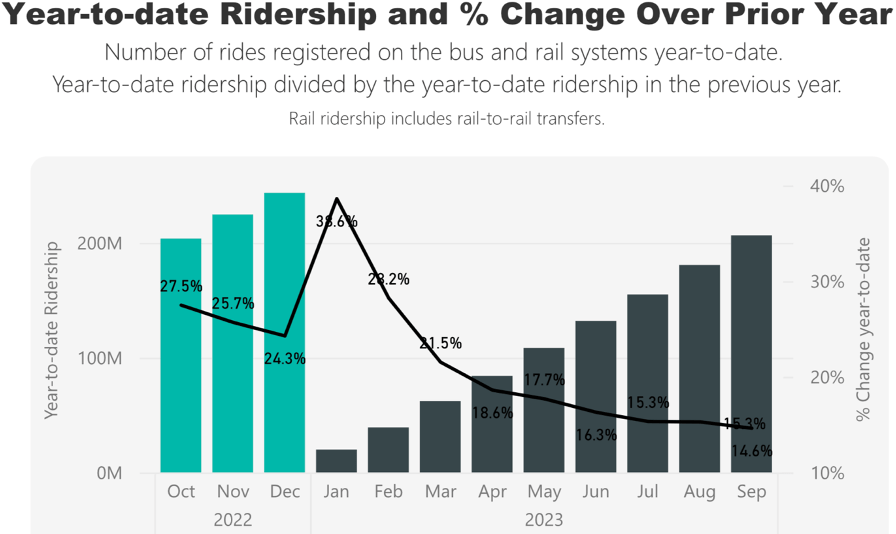
The CTA stated that the first week of October 2023 was the highest system ridership week since the start of the pandemic. The week included two of the highest days of ridership on record since then, totaling about 2 million riders between both days. While numbers are slowly making their way back up, commuters are still finding trouble with city transportation, influencing them to turn to other modes to get around.
“There was a time when I got off work and it was a Friday, and the trains were delayed, and I didn’t know why. I’d look and it would say 30 minutes, and then I’d look again, and it would be 15 minutes more, so I was like, okay, I’ll just take an Uber,” Grace Morgan, a Chicago resident, said.
According to an analytics firm, Inrix, increasing travel delays from public transportation could be tied to commuting congestion and are reflected in the increased driving inside and outside of the downtown area. The NRDC’s Action Fund conducted a statewide study and found that 61% of Illinois residents support shifting investments away from expanding roads and putting money toward investing in the city’s transportation systems. Residents want to make it easier and safer to walk, bike and take public transit.
“If half of our car trips are just really short trips, like those are going to be the easiest to replace with bike trips and things, but people need to feel safe doing it,” Bryce Hart, Chicago biker, said.
The journey to improving Chicago’s congestion problem is complex, with a need for balanced solutions that account for both transportation needs and environmental impacts. City officials said they aim to collaborate with experts and residents as they continue to move forward with infrastructure development.
 Michaela Wilson